
Chicago Business Op-ed: Illinois needs clearer rules for removing problem police officers
Updated: 2 days ago
Originally published June 11, 2026 on chicagobusiness.com
Based on the recently published “SAFE-T Act Policing Workgroup Recommendations,” the current state of police decertification in Illinois reflects a painful truth: Illinois has made progress on decertification reform, which removes the legal authority to serve as a police officer in that state, but the current system still leaves significant gaps that undermine public trust, accountability and transparency.
Illinois still relies too heavily on police departments to identify and report officer misconduct to the Illinois Law Enforcement Training & Standards Board. That approach is insufficient. Community members, civilian oversight authorities and state’s attorneys often become aware of serious misconduct long before law enforcement leadership acts.

That reality was one of the driving forces behind the “State Police Decertification Laws National Report Card,” which found that accountability systems are weakened when they rely almost exclusively on internal law enforcement reporting while minimizing civilians and independent oversight mechanisms.
That is why Illinois law allowing civilians and civilian oversight authorities to file complaints related to decertifiable conduct with the training and standards board is so important. Civilians can now initiate the decertification process directly through discretionary decertification. Civilian oversight authorities can also submit notices of violation and, in some cases, conduct or review investigations involving officer misconduct.
But Illinois still lacks clear administrative rules explaining how these complaints should be handled. That needs to change.
The Illinois Law Enforcement Training & Standards Board should adopt uniform statewide protocols governing how complaints from civilians, civilian oversight authorities and state’s attorneys are received, reviewed, investigated and resolved. Most important, there must be a formal mechanism for handling complaints submitted by civilian oversight authorities.
Unlike ordinary civilian complainants, civilian oversight authorities often possess statutory investigative capability. They may conduct independent investigations, review internal affairs investigations, analyze evidence, interview witnesses and issue findings regarding misconduct. Complaints from these authorities therefore carry an added layer of investigative review and credibility that should be recognized within the decertification process.
As such, complaints submitted by civilian oversight authorities should receive the same institutional consideration currently afforded to complaints submitted by police chiefs and sheriffs.
Illinois should look to states like Vermont, where administrative frameworks more clearly incorporate civilian oversight into police accountability systems.
The proposed rules should also provide detailed guidance explaining how civilian oversight authorities should submit investigative findings and what timelines govern review and response.
Likewise, public engagement must become a larger part of the process. Illinois Law Enforcement Training & Standards Board meetings and public comment opportunities should be fully hybrid and accessible online and in person. Agendas, minutes and recordings should be promptly publicly posted. Indeed, states like Minnesota already make many accountability proceedings and meetings publicly accessible online, including through YouTube. Illinois should do the same.
A decertification system that depends almost entirely on internal law enforcement reporting will always leave accountability gaps. Incorporating civilians and civilian oversight authorities more fully into the process is not anti-police. It is pro-transparency, pro-accountability and necessary to rebuild public trust in policing.
This is the best way for the “SAFE-T Act Policing Workgroup Recommendations” to have a long-term impact.
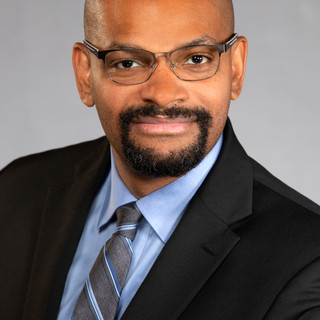
Carlton T. Mayers II, founder, owner and CEO of Mayers Strategic Solutions, is the former policy counsel for the policing reform campaign at the NAACP Legal Defense & Educational Fund, directed the NAACP national office’s criminal justice reform program and assisted Illinois’ Legislative Black Caucus in drafting the policing reform language in the SAFE-T Act. He is the author of the “State Police Decertification Laws National Report Card.”


World builders: the default VRChat skies are recognisable from across a lobby.
Ten minutes with this and your world stops looking like a template. Keep the file under the size limit though, people on Quest will just not load in.